
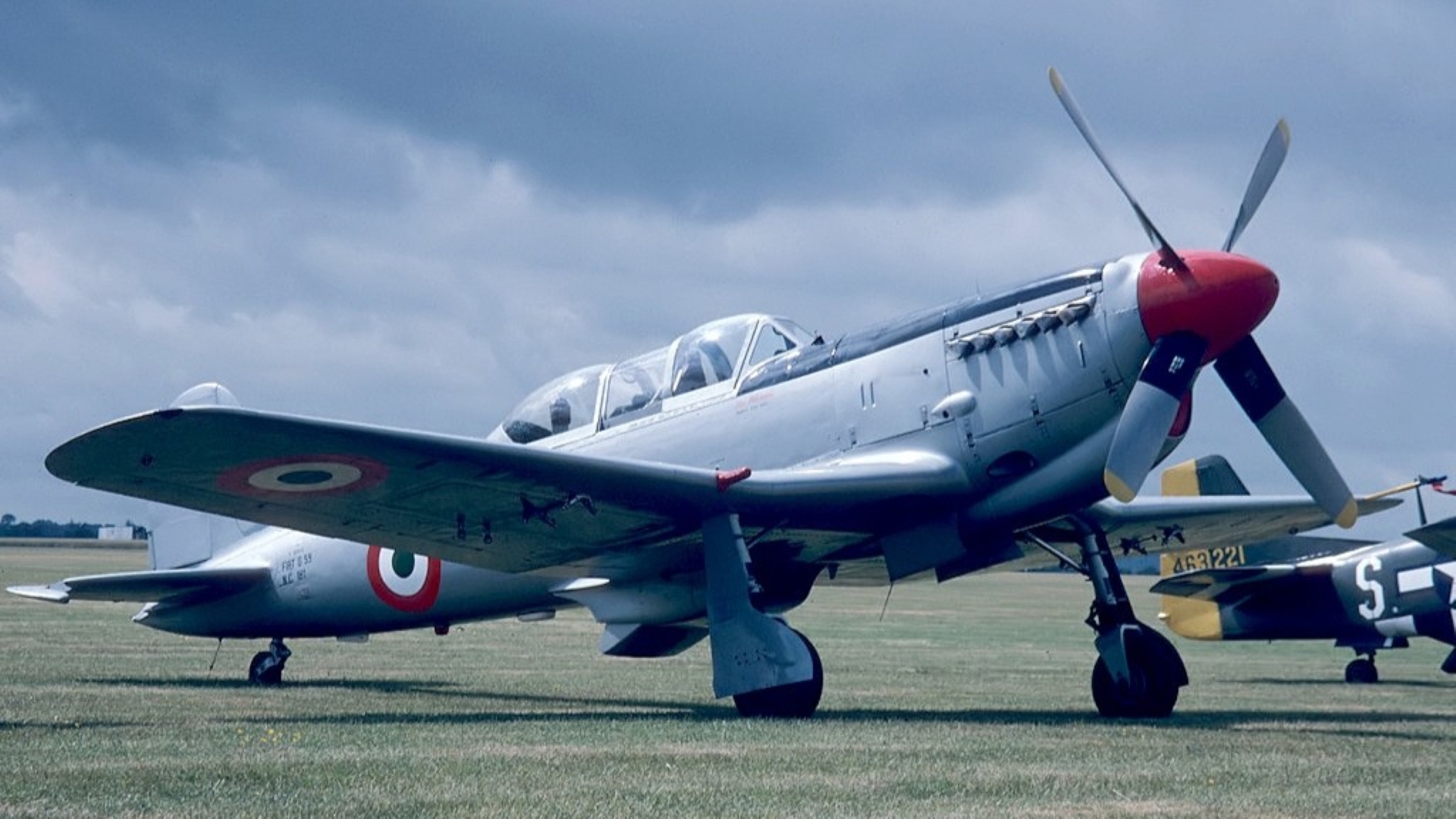
86" Fiat G.55 Centauro
Italy's finest WWII fighter — the one that could outmaneuver a Spitfire — in giant scale. Guaranteed to be the only one at your field.
A Legend, Faithfully Cut
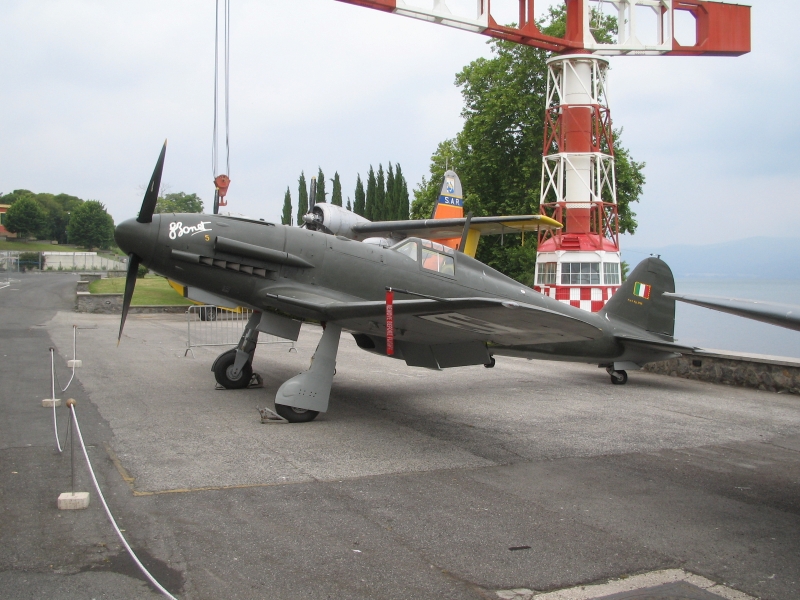
The Fiat G.55 Centauro was one of Italy's finest WWII fighters — powered by a license-built Daimler-Benz DB 605 engine (the same powerplant as the Messerschmitt 109G), capable of 400+ mph, and able to outmaneuver a Spitfire. Only a small number were built before Italy's government fell in 1943, making it one of the rarest and most distinctive fighters of the war. Paul Byrum's 86" design was published in RCM magazine in 1997 and has delighted builders ever since with its excellent flying characteristics and one feature that sets it apart from every other giant-scale warbird: no cowl to buy and no canopy to buy.
Kit Cutters supplies the precision laser-cut wood. This guide covers the rest — the honest, model-specific list of what you'll buy to complete it.
What's in the Box?
Included in the Short Kit
- Precision laser-cut wood parts only — ribs, formers, shaped parts
- Low-wing rib set and fuselage formers
- Slab-side fuselage and strip-planking parts
Required Separately
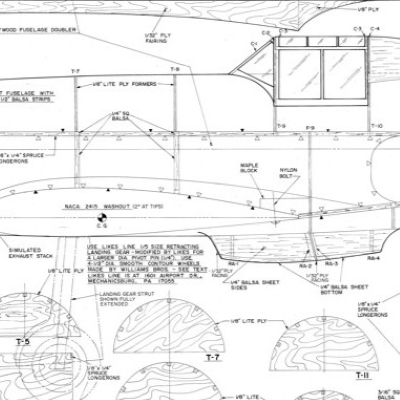
- Plans (free download from Outerzone.co.uk)
- Spars, sheeting, strip balsa for planking
- Engine (35–52cc gas) or electric equivalent
- Landing gear, covering, servos, hardware
- Spinner (no separate cowl or canopy purchase needed)
Everything Else You Need to Complete This Kit
The G.55 Centauro is a simpler accessory list than most warbirds — no cowl, no canopy. Both are built from the plan. What you do need is well-sourced and straightforward.
Power System
The plan specifies 1.8–3.2 cu in glow, which converts to roughly 30–52cc in modern gas equivalents. Builders have had great results with the Zenoah 38 and Quadra G-45. The original article notes that any more than the 3.2 class is probably too much for this airframe.
GAS — recommended| Engine | 35–52cc gas. Zenoah 38, DA-35, DA-50R, or Quadra 42/45. The plan cites Quadra 35, 42, Zenoah 38, and Webra Bully as proven choices. Confirmed builders have used the Quadra G-45 (ZDZ 40–50 class). | Desert Aircraft |
| Fuel tank | Sized to engine; positioned carefully — the G.55 tends to be nose-heavy so keep the tank as far aft as possible | Dubro |
| Spinner | The nose builds up directly to the base of the spinner — spinner size and fit is critical to the finished appearance. Size per engine shaft. | Tru-Turn |
| Prop | Size per engine; 20"–22" typical for 38–50cc class | Builder preference |
| Motor | ~40–50cc class outrunner, 190–230 KV. The G.55's inline engine profile suits electric well — no radial cowl cooling concerns. | Specialty RC retailer |
| Battery | 10S–12S LiPo; position carefully for CG — the G.55 tends nose-heavy so battery placement is important | Specialty RC retailer |
| ESC | 100–130A with generous margin | Specialty RC retailer |
Nose & Canopy
No purchase needed| Engine nose | Built up from balsa and ply directly to the spinner base — no separate fiberglass cowl. Plan templates cover all nose formers. | Per plan |
| Canopy | Built-up ply frame covered with sheet acetate — no vac-formed canopy to source. The result is a clean, light, and easy-to-make canopy. | Per plan |
Landing Gear
Fixed or retractsThe plan shows fixed gear as standard, but the original article notes the plane tends to run nose-heavy, so retracts won't upset the balance. Multiple builders have fitted Robart retracts with good results.
| Main retracts (recommended) | Robart electric or pneumatic retracts; confirmed by builders. Strut length from wing bottom to axle: 6-15/16" (per plan spec). | Robart |
| Fixed gear option | Plan shows fixed gear as standard option. If using fixed gear, the original design used Likes Line 1/5 scale gear modified with a larger 1/4" pivot pin. | Per plan / Secondary R/C Market |
| Tailwheel | Fixed tailwheel per plan spec | Robart / Dubro |
| Main wheels | 4.5" Williams Bros Smooth Contour wheels (original plan spec). Robart equivalent also works. | Robart / specialty |
Servos
6 channels| Ailerons | 2× 90+ oz-in, ball bearing | Builder preference |
| Elevators | 2× 90+ oz-in, ball bearing | Builder preference |
| Rudder | 1× 120+ oz-in, ball bearing | Builder preference |
| Flaps | 2× 65+ oz-in (split flap design; optional but shown on plan) | Builder preference |
| Throttle | 1× 50 oz-in | Builder preference |
Covering & Finishing
| Airframe finish | 1 oz fiberglass cloth and resin (confirmed by builders); then paint. Pica Gluit recommended for all exterior planking and sheeting (sandable, no ridges). | Chief Aircraft / specialty |
| Paint | Italian Regia Aeronautica or Aeronautica Nazionale Repubblicana schemes. The 1944 Italian ANR scheme is popular among builders. | Builder preference |
Hardware
| Control horns & linkages | Sized per plan; false leading edge construction on all surfaces simplifies linkage routing | Specialty RC retailer |
| Hinges | Flat hinges; all flying surfaces use a false leading edge per plan | Dubro / specialty |
Detailed Specifications
| Wingspan | 86 in |
| Wing area | 1,118 sq in |
| Scale | 1/5 (stand-off scale) |
| Power | 1.8–3.2 cu in glow / 30–52cc gas equivalent |
| Airfoil | NACA 2415 (wing); SD 8020 (tail surfaces) |
| Wing washout | 2° at tip (no tip-stall tendency) |
| Cowl | None — nose built up to spinner base |
| Canopy | Built-up ply frame + sheet acetate |
| Gear | Fixed or retract (Robart recommended); strut: 6-15/16" wing to axle |
| Main wheels | 4.5" (Williams Bros Smooth Contour or equivalent) |
| Flaps | Split flap design (optional — shown on plan) |
| Min. radio channels | 6 |
Specs from Paul Byrum's published Fiat G.55 Centauro plan (RCM July 1997, available free from Outerzone.co.uk plan ID oz5972). The plan includes the full build article with photos. NACA 2415 wing airfoil is noted as dependable, stable, and acrobatic.
Paul Byrum
Paul Byrum's Fiat G.55 Centauro was published in RCM magazine in July 1997 and has remained one of the most distinctive giant-scale warbird designs available. Its combination of excellent flying characteristics, manageable accessories list, and guaranteed uniqueness at any flying field has earned it a loyal following among experienced builders who want something outside the mainstream.
Download Free PlansThe Build Journey
The G.55 is described by builders as "not a hard build" — the slab-side fuselage with strip planking goes quickly, and the absence of a cowl and canopy removes two of the most fiddly stages of any warbird build. Treat these ranges as a rough sense of scope, not a fixed estimate.
Where a short kit saves you time
Byrum's plan includes full-size templates for all ribs and formers. A Kit Cutters short kit removes the entire cutting stage — your parts arrive precision laser-cut and labeled, so you start at assembly. The G.55's strip-planked fuselage is the most time-intensive part of the build; having accurate laser-cut formers to build over makes a significant difference.
The four stages of assembly
Stage 1: Fuselage Assembly
The G.55's slab-side and strip-planked fuselage — simpler than it looks.
- Build slab-side fuselage sides
- Add formers and internal structure
- Strip-plank the curved sections
- Build up the nose to the spinner base
Stage 2: Wing Assembly
Low-wing with NACA 2415 airfoil and false leading edges throughout.
- Build the main spar box
- Install wing ribs with false leading edges
- Fit landing gear mounts
- Add optional split flaps
Stage 3: Tail Assembly
SD 8020 airfoil on all tail surfaces — wind-tunnel developed for better tail authority.
- Build horizontal stab with false LE
- Build elevator surfaces
- Assemble fin and rudder
- Install tail wheel assembly
Stage 4: Systems & Final Assembly
Engine, canopy, covering — and the satisfying moment of fitting the spinner to the built-up nose.
- Install engine / motor
- Build ply canopy frame and glaze with acetate
- Covering and paint
- Verify CG — expect nose-heavy tendency
Frequently Asked Questions
Ready to Build Your Fiat G.55 Centauro?
Buy the 86" G.55 Centauro Kit — $564.00
Premium laser-cut short kits for large-scale and giant-scale radio-controlled aircraft builders. USA-based quality craftsmanship for serious hobbyists.
Shop
Resources
Newsletter
Subscribe for new kit announcements and build tips.
© 2026 Kit Cutters. All rights reserved.