
Researching a Scale Subject: Where to Start
Researching a Scale Subject:
Where to Start
Kit Cutters—July 15, 2026—From Plans to Flight Line, Post 2
This is the second post in the From Plans to Flight Line series, which follows the complete journey of a large-scale RC aircraft build from choosing a subject to flying it. The first post covered how experienced builders choose their next project. This one picks up where that one left off.
The aircraft is chosen. You know what you want to build. Now comes the work that most builders either rush through or skip entirely — and it is the work that makes the difference between a model that looks like an aircraft and one that looks like that aircraft.
Research is what turns a generic subject into a specific one. It is what gives a finished model a history, a serial number, a unit, a pilot, and a moment in time. It is also, practically speaking, what tells you exactly what color to mix, which panel lines go where, and whether the aircraft you have in mind carried that particular marking in that particular theater at that particular point in the war.
Done well, research makes every decision that follows easier and more confident. Done poorly — or skipped — it tends to show up in the finished model in ways that experienced eyes at the flight line will notice.
Here is how experienced builders approach it.
Start with Photographs, Not Profiles
Color profiles and three-view drawings are useful tools, but they are interpretations. Somebody made decisions about what that aircraft looked like — which shade of green, how worn the paint was, where exactly the squadron codes sat on the fuselage — and those decisions may or may not reflect what the aircraft actually looked like in service.
Period photographs are where the research really begins. Service photographs, maintenance photographs, airfield shots, combat imagery, pilot portraits in front of their aircraft — these show the real thing in its actual context. Paint that has faded and chalked in the sun looks different from the same paint fresh from the depot. An aircraft that has seen six months of operational flying looks different from one that just rolled out of the factory.
The goal in this early stage is to accumulate as many photographs as possible of the specific aircraft or type you are researching, from as many angles and time periods as you can find. The more you see, the better your sense of what is consistent and what varies across individual aircraft and over time.
A color profile shows you what an aircraft was supposed to look like. A period photograph shows you what it actually looked like.
Choose a Specific Aircraft, Not Just a Type
This is the decision that separates a scale model from a general representation of a type. Every aircraft that ever flew had a serial number, a unit assignment, a home airfield, and a period of service. The more specific you can be about which aircraft you are modeling, the more specific every subsequent decision becomes.
"A Spitfire" is a starting point. "Supermarine Spitfire Mk Vb, serial BL479, No. 92 Squadron RAF, Biggin Hill, autumn 1941" is a scale subject. The difference between those two descriptions is the difference between picking colors from a chart and knowing exactly which colors to mix, which squadron codes to apply, and what that specific aircraft looked like on the specific missions it flew.
Narrowing to a specific aircraft and period also protects you from the most common research mistake in scale modeling — combining details from different marks, different units, or different time periods into a single scheme that never actually existed. It happens more often than builders like to admit, and it is often visible to anyone who knows the type well.
The research itself usually leads you to the specific aircraft naturally. As you work through photographs and records, one particular machine or marking scheme will stand out — either because the documentation is exceptional, because the aircraft has a story worth telling, or simply because something about it is right for this project.
Use Primary Sources
The most reliable research starts at the most authoritative sources. For aviation subjects, that means national aviation museums, official military archive collections, and original documentation. These institutions hold the photographs, technical records, and historical context that secondary sources draw from — and sometimes get wrong.
Several of the major collections are accessible online and are genuinely useful for scale research:
Smithsonian National Air and Space MuseumTier 1
airandspace.si.edu/explore/collections
One of the most significant aviation collections in the world. Useful for aircraft history, technical background, and visual reference. The aircraft history card archive is particularly useful for researching specific serial numbers and service histories.
National Museum of the United States Air ForceTier 1
nationalmuseum.af.mil/Visit/Museum-Exhibits/Fact-Sheets/
Authoritative fact sheets on U.S. military aircraft covering specifications, service history, and technical details. A reliable first stop for any American military aviation subject.
Royal Air Force Museum CollectionsTier 1
The primary source for British military aviation research. Particularly useful for RAF subjects, markings, unit histories, and aircraft that served in both World Wars.
National Naval Aviation MuseumTier 1
The definitive resource for U.S. Navy and Marine Corps aviation. Covers carrier-based and naval patrol aircraft subjects in depth, with strong photographic and artifact collections.
Imperial War Museums / IWM DuxfordTier 1
Exceptional for wartime photography, personal accounts, and the broader historical context of military aviation. The Duxford collection includes flying examples and restoration-quality reference material for many WWII types.
For most WWII subjects, two or three of these sources together will give you a solid factual foundation before you go anywhere else. When primary sources agree on a detail, you can build on it with confidence. When they differ, that is useful information too — it tells you where genuine uncertainty exists in the historical record.
The Builder Community Knows Things
Museum archives and official records will take you a long way, but they will not tell you that the cockpit interior color on a specific mark was actually mixed differently in field conditions, or that a particular squadron had a well-documented habit of applying unit codes in a nonstandard size, or that the color profile everyone has been copying for thirty years was based on a misidentified photograph.
That kind of knowledge lives in the builder community, accumulated through years of collective research, correspondence with veterans and museum curators, and the close examination of surviving aircraft and artifacts. It is scattered across build threads, forum discussions, and the memories of builders who have been working with a particular type for decades.
RC Scale Builder and RC Groups are the right places to look for this kind of builder-specific research. Searching for build threads on your specific aircraft and plans will almost always surface questions that other builders have already answered, corrections to published color profiles, and tips that only come from someone who has actually built the same kit you are about to build.
A few hours reading existing threads before starting your own research can save a great deal of backtracking later.
Walkarounds and Surviving Aircraft
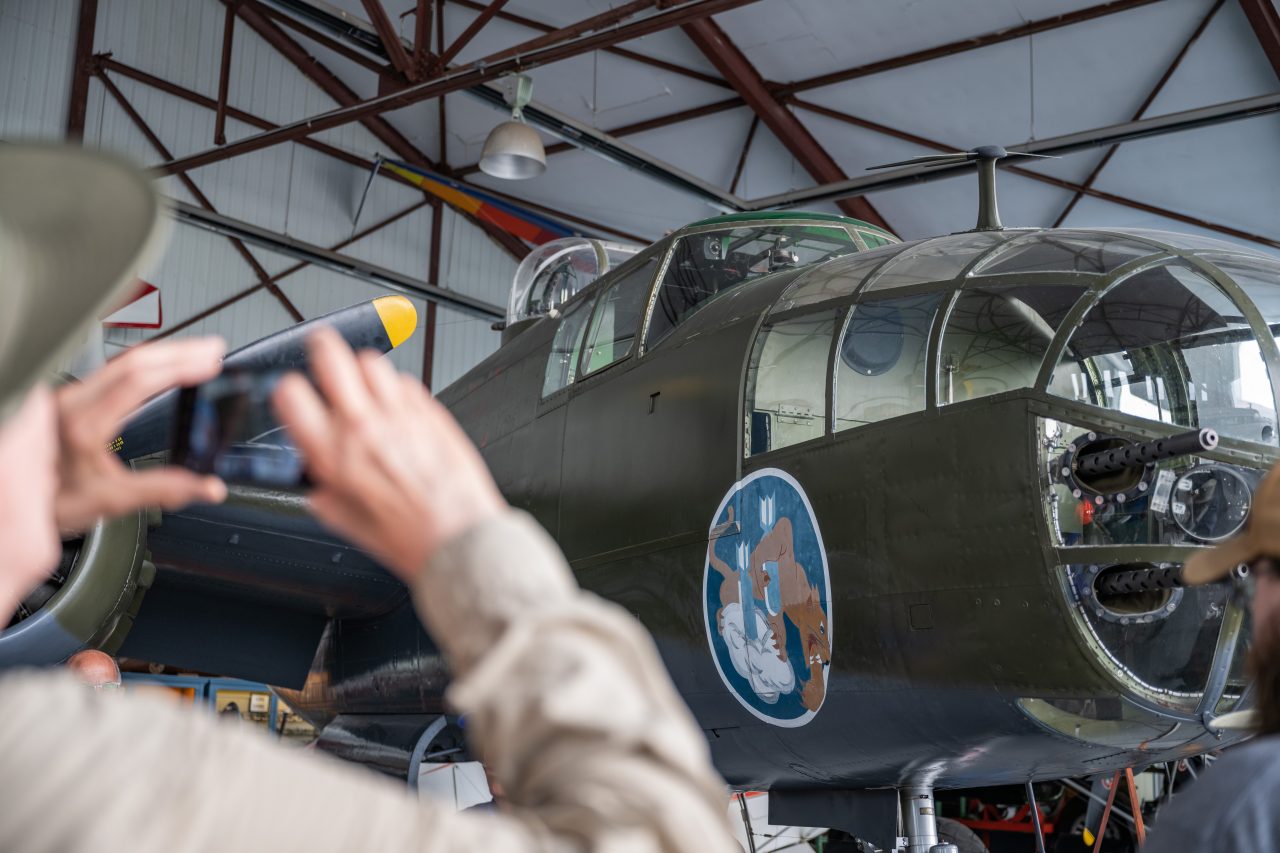
If there is a surviving example of your aircraft subject accessible to you — at a museum, an airshow, or a private collection — it is worth making the effort to see it in person. Photographs taken under controlled conditions of a real aircraft at close range, from every angle including underneath and inside the cockpit if access is permitted, are a different order of reference material from anything you will find in a book or online.
The scale modeling community calls these walkaround photographs, and they are exactly what the name suggests. Builders have been sharing walkarounds for decades, and a good set of walkaround photos can resolve details about panel line placement, fastener positions, antenna locations, and surface texture that no color profile or three-view will ever capture. One of the best places I know of with an extensive list of great walkaround is at https://www.rcscalebuilder.com/
Even if you cannot visit a surviving example personally, walk-around photo sets circulate widely in the builder community and through modeling publications. They are worth searching for before you start on any surface detail work.
Know When the Research Is Done
There is a point in any research process where further investigation produces diminishing returns. For a scale builder, that point is when you can answer the following questions with confidence:
•Which specific aircraft am I modeling, and in which period of its service?
•What colors were applied to this aircraft, and in what scheme?
•What markings, codes, and insignia did it carry?
•Are there photographs that confirm the details I plan to model?
•Have other builders researched this subject, and is there anything in the community record that contradicts what I have found?
When you can answer all five questions with documented evidence rather than assumptions, the research has done its job. The bench is waiting.
The Research Shows at the Flight Line
The detail work that makes a scale model convincing to experienced eyes is not done at the airbrush or the sanding block. It is done in the weeks before any wood is cut, when the builder is still at the desk with photographs and reference material rather than at the bench with tools.
A model built from solid research has a specificity that generic builds lack. The markings are right. The colors are defensible. The particular aircraft being represented had a history, and that history is visible in the finished model to anyone who knows the type.
That is the goal. Not a model that looks like an aircraft — a model that looks like that aircraft, on that day, in that theater. The research is what makes the difference.
The next post in this series covers the short kit decision — an honest comparison of scratch cutting versus laser-cut short kits for experienced builders. It goes up on August 15th.
When your research is done, and you are ready to source the wood parts for your next build, browse the Kit Cutters catalog at KitCutters.com. The Buyers Guide pages include verified specs and accessory lists for aircraft in the catalog — useful reading while the research is still underway.